

Christmas is a time for laughter, music, games, parties and making memories. But whether it is noise coming from neighbouring properties or the sounds of your own celebrations travelling through walls, floors and ceilings, unwanted noise can take the shine off the festivities.
Soundproofing for Christmas starts with understanding how that noise travels. A suitable sound insulation system can reduce transmission between spaces, but the right approach depends on your property, the source and the routes involved. It is not a matter of sticking a few soft panels on the wall and expecting silence.
At Pinnacle Sound Limited, we believe everyone deserves to enjoy their home in comfort and peace. Whether you want to reduce incoming noise or contain your own celebrations, planning now gives you a clearer idea of what is practical, what work may involve and what to ask before booking.
Where does festive noise travel?
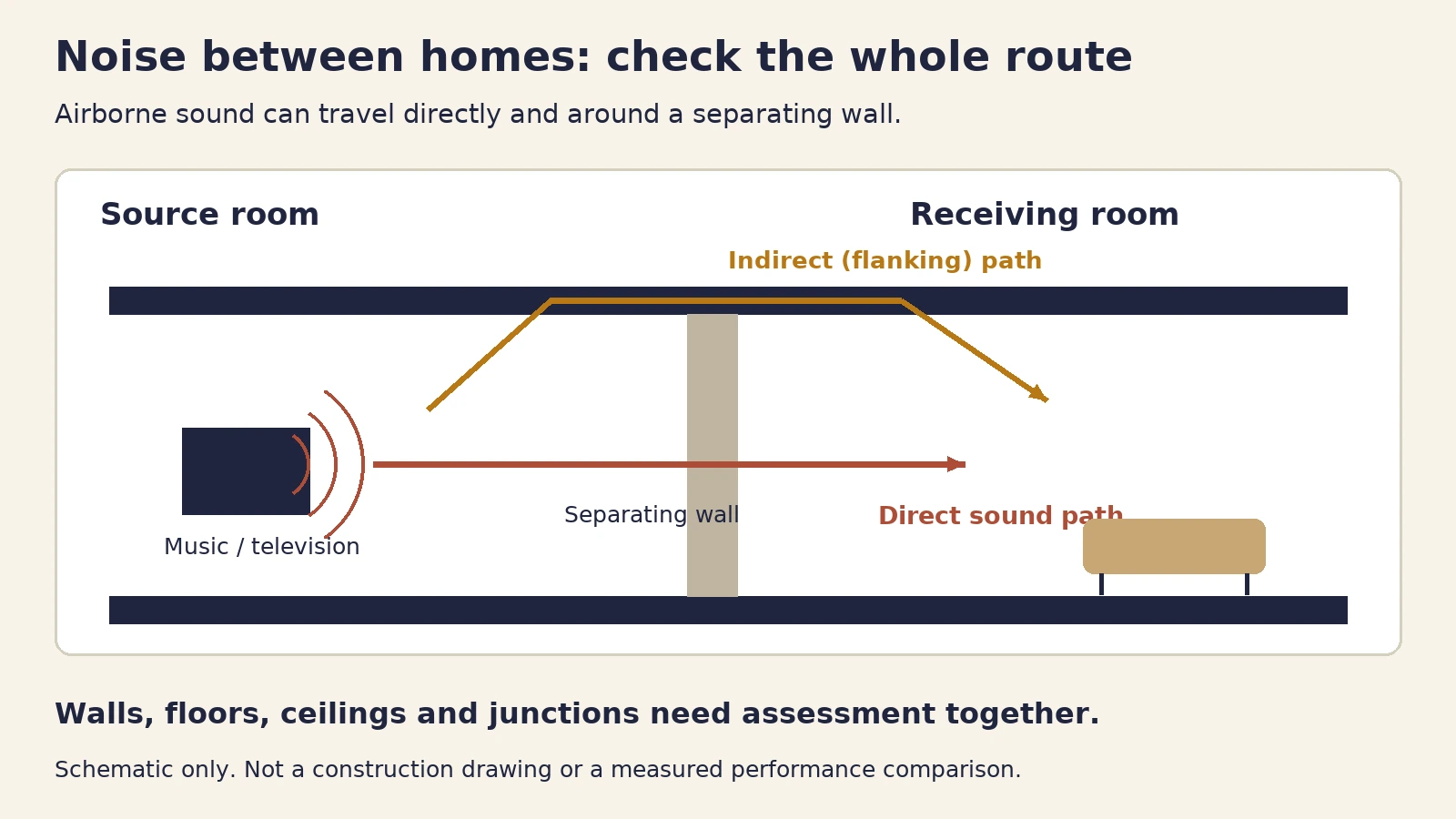
Television, conversation and music begin as airborne sound. They travel through the air and can set walls, floors and ceilings vibrating, allowing sound to be heard on the other side. Footsteps and chairs moving across a floor can also put vibration directly into the structure. That is impact noise, and it may require a different response.
The surface nearest the sound is not necessarily the only route. Noise can pass around a separating wall through adjoining floors, ceiling voids or connected building elements. These indirect routes are called flanking paths. Gaps around services and poorly detailed junctions can also affect the result.
It helps to separate the everyday problem from the seasonal peak. Does the same television disturb you on an ordinary evening, or is the concern an occasional gathering? That distinction will not diagnose the building, but it helps define whether you are considering a lasting change for regular use or managing a particular event.
Before choosing products, note which sounds you hear, where they seem strongest and when they occur. Explain whether you are concerned about next door, the flat above or rooms within your own home. A short description and room photographs make a more useful starting point than guessing which surface needs treatment.
What can soundproofing for Christmas help with?
A party-wall system can be designed to reduce sound travelling between adjoining homes. Floor treatments can address airborne noise, impact noise or both, depending on the construction. A ceiling system may help with noise from above, although access to the floor above and the strength of flanking routes can influence the available options.
Sound containment matters too. If you enjoy films, music or family games, reducing sound transfer is about considering other people as well as your own comfort. The same assessment should consider where sound leaves the room, rather than treating containment as a completely separate problem.
No single product suits every situation. A television heard faintly through one wall is a different brief from bass travelling through a connected structure. Tell us which sound is most troublesome and how you use the room. We can discuss a realistic scope rather than promise a completely silent home or celebrations that nobody else will hear.
Why decorations and soft panels are not sound insulation
Curtains, rugs and upholstered furniture can make a room less reflective. That can be helpful when conversation sounds harsh inside a busy living room. It does not mean those furnishings form an effective barrier between your home and the property next door.
Decorative acoustic foam is intended primarily for sound absorption within a room. Sound insulation concerns transmission through a separating construction. Confusing the two can mean spending money on a room that sounds different inside while the neighbour noise remains.
Simple changes are still worth considering before building work. Keep music at a considerate level, move speakers away from shared walls where practical and discuss celebration plans with neighbours. These measures do not replace a properly designed system, particularly for persistent noise, but building work is not a reason to ignore the source. Keep ventilation and safety arrangements working as intended.
How a designed wall or ceiling system works
Where the assessment supports a new wall or ceiling lining, the specified elements work together. Decoupling means reducing the rigid connection that carries vibration. The Genie Clip system introduces resilient separation; it does not remove every physical connection to the building.
Absorption within the framework void is provided by Rockwool RW3. This absorbs sound energy in the cavity and reduces cavity resonance. It is different from placing decorative absorbers on the finished room surface.
Mass comes from dense board layers. Our approved wall and ceiling build-up uses one layer of 19mm Soundplank, then a Tecsound membrane, followed by one layer of 12.5mm Soundbloc. Damping from the membrane helps control vibration within that layered assembly. None of these components should be presented as a universal cure on its own.
Acoustic sealant, perimeter flanking bands and appropriate junction details complete the specified arrangement. Floors need their own design, using the relevant multi layer acoustic flooring boards, Rockwool and Tecsound where specified. A wall specification should not simply be copied onto a floor. Doors, services and other weak points still need assessment.
Planning soundproofing for Christmas without rushing
A seasonal deadline is a reason to ask early, not to skip the assessment. Before confirming work, establish which rooms need access, what preparation is included and whether the room can be used during installation. Protection, removal of existing finishes where needed, fitting and making good all need to be allowed for.
New wall linings reduce usable floor area, while ceiling systems reduce available height. The amount depends on the actual design. Electrical fittings, radiators or other services may need alteration, but that should be checked rather than assumed. Noise, dust and redecoration are practical considerations when you are also preparing to host guests.
Ask us to confirm current availability and whether the agreed scope can be completed before Christmas. We cannot promise a completion date from a general article. If the programme does not suit your household, planning for work after the festivities may be the better decision. Avoid buying materials or rearranging a room until the scope and timing are agreed.

What should you send us before a visit?
For soundproofing for Christmas, tell us whether you mainly want less incoming noise, better containment or both. Include the type of property, the affected room and any information you have about the existing wall, floor or ceiling. Approximate dimensions and photographs help us understand the setting without replacing an assessment.
Mention restrictions too: a room that cannot be cleared, a low ceiling or limited access to an upstairs flat may change the options. Ask what the proposal includes, what remains untreated and which factors may limit the improvement. A useful quotation should relate to your building, not a generic promise.
Whether you want a few more Silent Nights, greater privacy or simply a more comfortable living environment, the aim is a suitable long-term improvement. Less noise. More comfort. More enjoyment.
To discuss soundproofing for Christmas, contact Pinnacle Sound and check the next available appointment. Invest in your quieter future, with the practical details understood before work begins.
Contact Pinnacle Sound for a no obligation site visit and an honest assessment of your noise problem.